property
$47M Trail Corridor Drives Lansing Home Prices Higher, Sales Faster
Properties within a quarter-mile of the expanded Lansing River Trail are selling faster and for more money than anywhere else in the city.
How we reported this
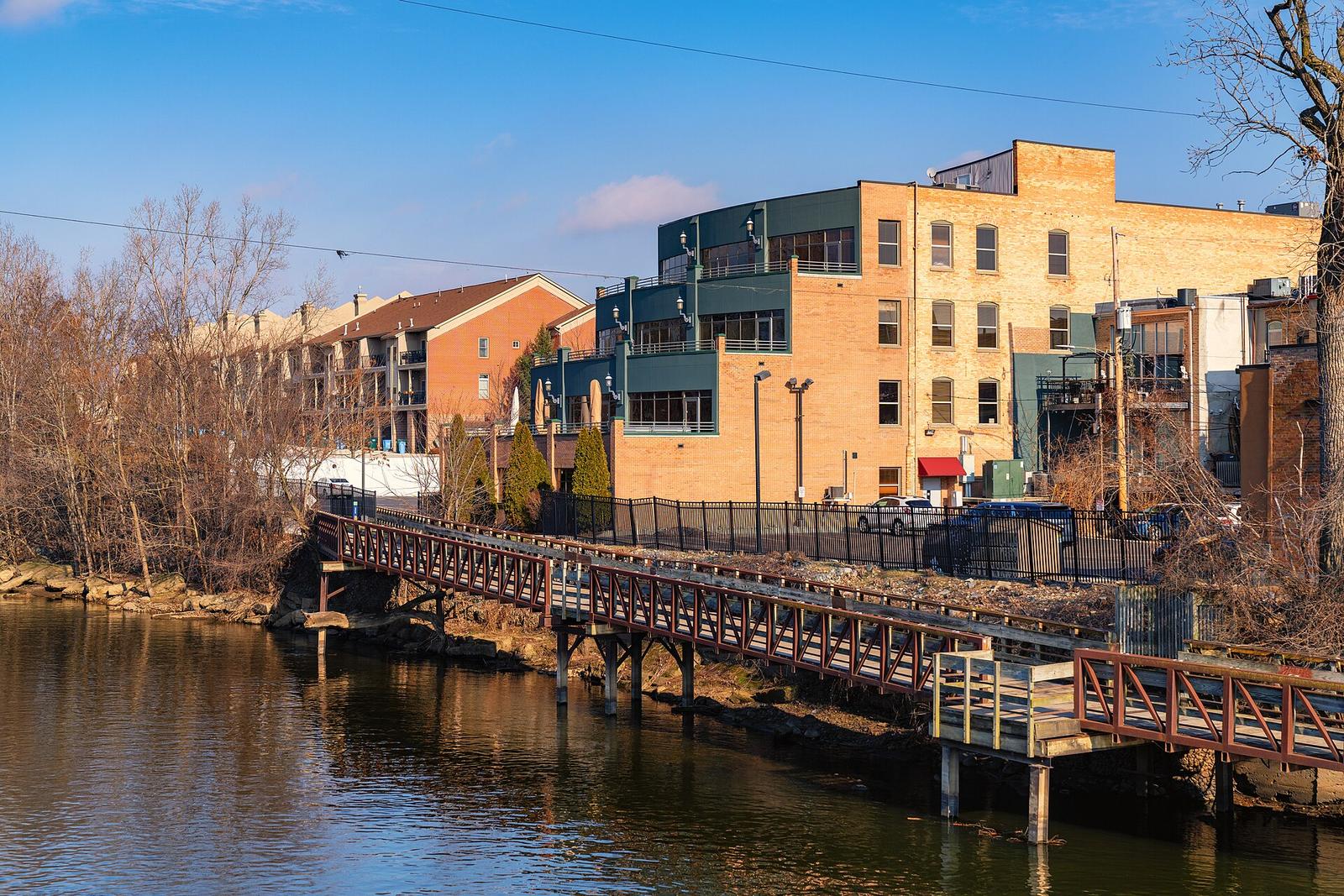
Home sellers near the Lansing River Trail are getting a bonus they didn't plan for. Since the City of Lansing broke ground on the $47 million River Trail Expansion and Connectivity Project in March 2025, median sale prices for residential properties within a quarter-mile of the corridor have climbed roughly 11 percent, outpacing the broader Ingham County market by nearly six percentage points, according to figures compiled by the Greater Lansing Association of Realtors through the second quarter of 2026.
The timing matters. Mortgage rates have been stubbornly elevated for most of 2026, hovering around 7.1 percent for a 30-year fixed loan, and buyer demand has softened across much of mid-Michigan. That makes the activity around the trail expansion all the more striking. Buyers are still competing for homes in Old Town and REO Town, two of the neighborhoods closest to the improved trail corridor, even as listings in other parts of the city sit longer.
What the Project Actually Delivers
The River Trail Expansion is not a cosmetic upgrade. The project adds 4.2 miles of paved multi-use path, connects the existing trail network to the Potter Park Zoo on the south end and to the Sycamore Street pedestrian bridge on the north, and includes three new trailhead parking areas with lighting and restrooms. Funding comes from a combination of federal Rebuilding American Infrastructure with Sustainability and Equity (RAISE) grant dollars, $18 million awarded in late 2024, and a matching commitment from the Michigan Department of Natural Resources Trust Fund.
The Capital Area Transportation Authority has also rerouted two bus lines to stop within 500 feet of the new Kalamazoo Street trailhead, which opens this September. That last detail matters to buyers who are not just purchasing a home but calculating commute options and daily convenience. Walkability scores for parcels between Martin Luther King Jr. Boulevard and the Grand River have already been revised upward on several real estate platforms.
Old Town, historically one of Lansing's more eclectic commercial and residential pockets, is seeing the sharpest price movement. A three-bedroom bungalow on Elm Street sold in May 2026 for $219,000, $31,000 above its 2024 assessed value and 18 days under the Ingham County median days-on-market figure of 24. REO Town, which sits just south and has been the target of incremental commercial investment since the REO Town Commercial Corridor Improvement Authority was established in 2019, is recording a similar pattern, with average price-per-square-foot up from $118 in early 2025 to $134 as of June 2026.
What Buyers and Sellers Should Watch Next
Phase two of the project, covering the stretch between the Michigan Avenue underpass and the Francis Park neighborhood on the city's west side, is scheduled to begin procurement in October 2026, with construction targeted for spring 2027. Planners at the City of Lansing Office of Planning and Neighborhood Development have flagged Francis Park and the adjacent Westside neighborhoods as areas where land values could begin moving ahead of the shovel, as happened near Old Town once the first RAISE grant was confirmed.
For current owners, the advice from local real estate professionals is straightforward: get a fresh comparative market analysis before listing, because automated valuation models are still catching up to the trail effect and may be underpricing your home. For buyers, the window before phase two construction begins is probably the last point at which Francis Park properties can be acquired without a trail premium baked in.
One structural caveat: global uncertainty, including the renewed instability in energy markets tied to ongoing U.S.-Iran military exchanges, could push mortgage rates higher still in the second half of 2026, which would cool transaction volumes even in strong micro-markets. Lansing's trail corridor is genuinely driving value, but it's not immune to macro headwinds. The neighborhoods closest to the new infrastructure are simply better positioned than most to absorb them.
This article is general information only and is not personal financial or investment advice. Consider your own circumstances and seek licensed professional advice before making financial decisions.